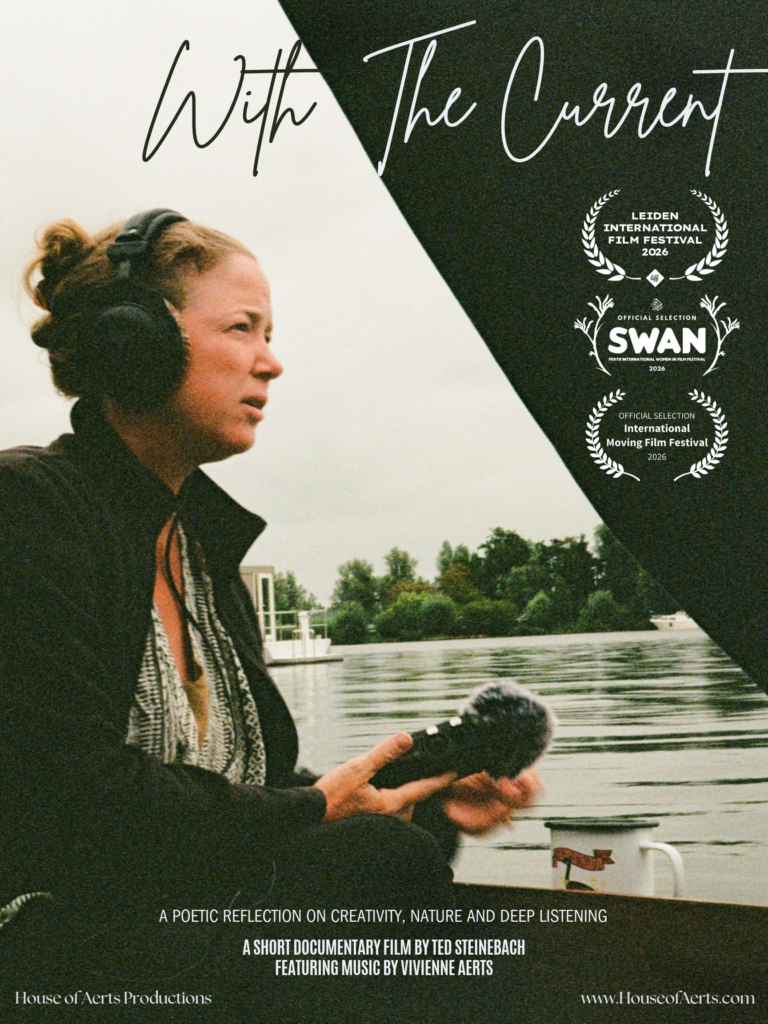
Recording an album on the water seemed so unconventional that I wanted to witness the process of musician Vivienne Aerts. Being an avid sailor, I know the Dutch lakes and waterways like the back of my hand: the history behind them and what it feels like to move through the Dutch landscape on the water. Although the water infrastructure is beautifully designed for recreational use, I expected challenges: the rain, the current, and especially the wind are ever-present forces, and it might not blow in the direction you want.
I saw the poetry in this. The Dutch have not only been fighting water, but have also found ways to live with it, and even use it to their advantage. What we can learn is that you can only move with it, and so it was with the filming process. For two weeks, we recorded, produced, slept, and ate on the boat. At night, we made a little tent over the boom; it doesn’t get more spartan than that. We had a few fixed moments in our schedule, like recording with the guest musicians and vocal tracking the water lock, but other than that, we just had to figure out which direction the wind would blow us.
I played with the idea of interviews, but realised that it was best to let the images speak: capturing the emotions, the wood of the old sailboat, the mess of all the gear we managed to jam into 10 m2, and how skin and hair weathered over the course of those days. Witnessing the bizarre situations: the double bass in a nook of a lake, or playing harmonica on the Amsterdam canals. But perhaps most importantly, showing the Netherlands as I see it: moving through the landscape as people have done for hundreds of years, seeing both its beauty and its flaws.
Nature and the wind blew me in a slightly different direction, and I hope the film gives viewers a sense of quiet, closeness, and reflection, and invites them to consider “listening” as a creative and human practice. And of course, to feel what it means to flow with the current instead of fighting it.